
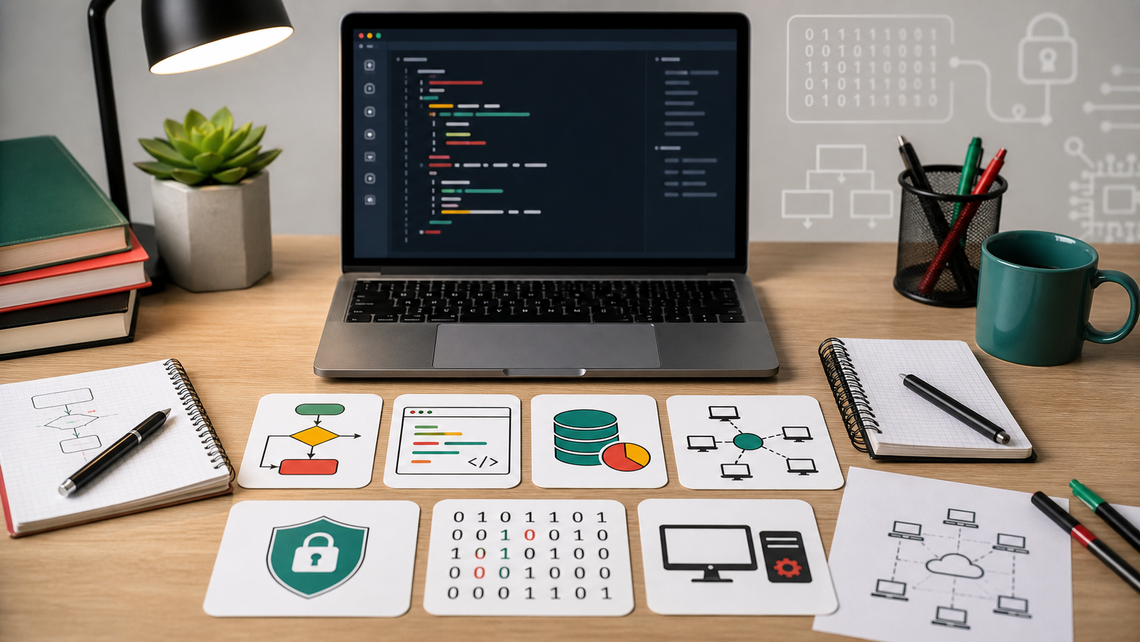
GCSE Computer Science is a practical and analytical subject. Students learn how computers work, how software is designed, and how to solve problems by writing, testing and improving programs.
At Super Thinkers, we support students across the core GCSE Computer Science content while adapting practice to the exam board used by their school. We build the foundations first, then strengthen exam technique, programming confidence and precise technical vocabulary.
What Students Cover
- Algorithms: decomposition, abstraction, flowcharts, trace tables, searching, sorting and writing clear step-by-step solutions.
- Programming: variables, data types, selection, iteration, functions, arrays, validation, file handling and debugging.
- Computer systems: CPU, memory, storage, embedded systems, binary, hexadecimal, logic and how hardware affects performance.
- Data representation: numbers, characters, images, sound, compression and the trade-offs behind digital storage.
- Networks: topologies, protocols, layers, the internet, client-server models and network security.
- Cyber security: threats, prevention, authentication, encryption and safe system design.
- Databases and SQL: records, fields, validation, simple queries and how structured data is used.
- Ethical, legal and environmental issues: privacy, data protection, automation, accessibility, e-waste and responsible use of technology.
Programming Confidence
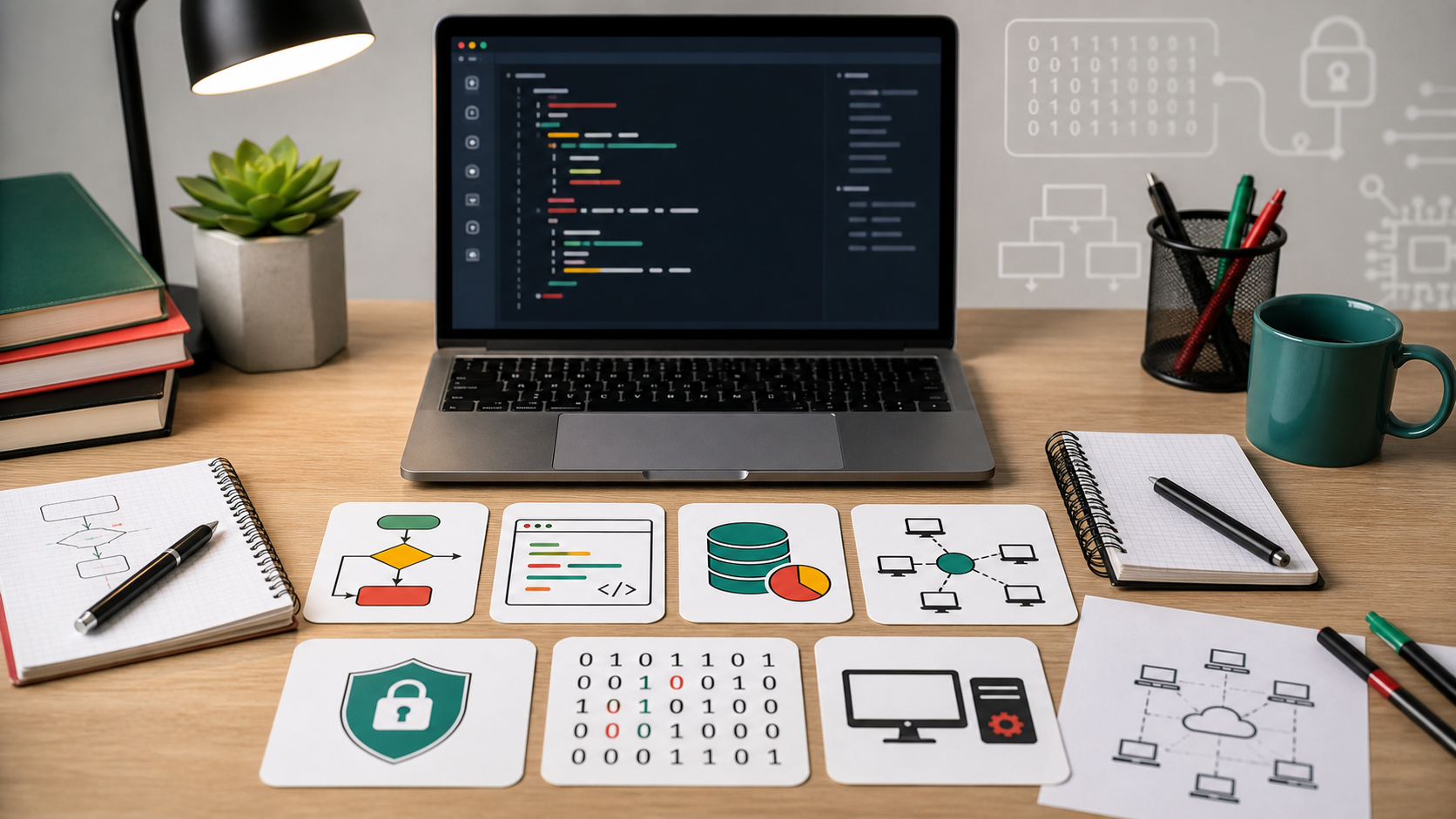
Programming is often the area where students need the most confidence. We teach students how to read a problem, break it down, plan before coding, test deliberately and explain their solution clearly. Python is commonly used, but the habits transfer to other approved languages where a school uses a different route.
Exam Board Differences
We cover the differences between the main GCSE Computer Science exam boards, including AQA, OCR, Edexcel and WJEC Eduqas. The core ideas overlap, but papers vary in programming language requirements, written question style, practical expectations, mark allocation and the balance between theory and problem solving.
Students practise with the wording and structure that matches their school route, while still developing the broader understanding needed to handle unfamiliar problems.
How Lessons Work
Lessons combine direct teaching, worked examples, independent practice and feedback. A student might trace an algorithm, debug a short program, explain a network process, practise binary conversion or improve a longer exam response. The goal is not just to remember definitions, but to use them accurately when answering questions.
Join the Waiting List
Families can register interest here: