
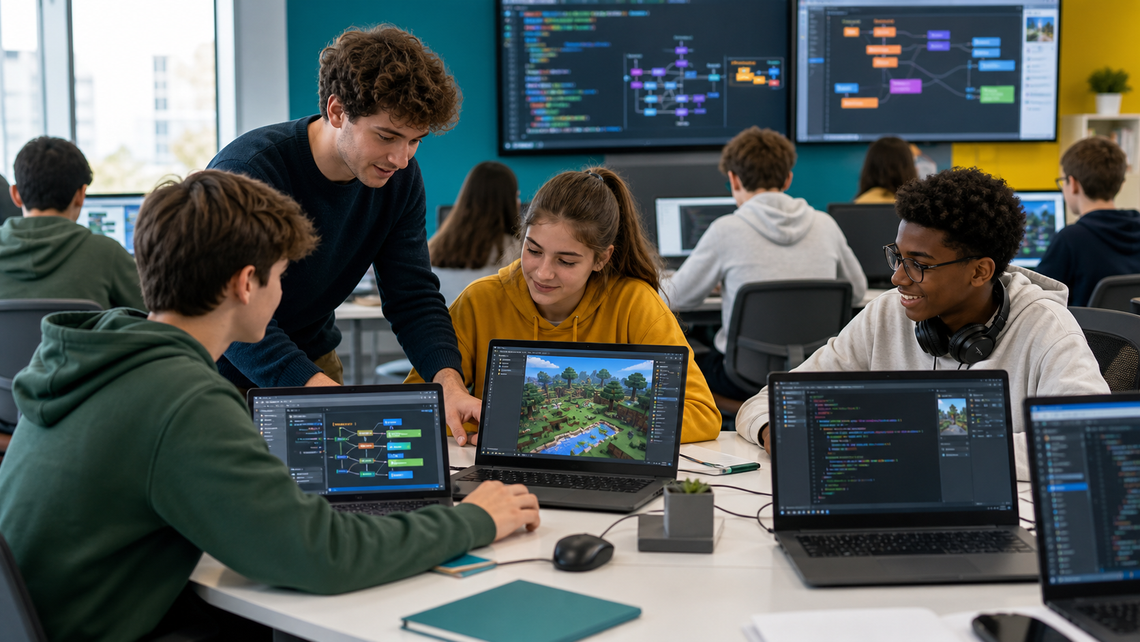
Super Techs for 11 to 14 year olds is designed for students who are ready to move beyond basic coding and start thinking like game developers. Students work through structured projects that combine creativity, logic, debugging and increasingly independent problem-solving.
The course uses game development because it gives students a clear reason to code. Movement, scoring, levels, enemies, collision, timers, physics, rules and player feedback all require careful programming decisions.
From Guided Projects to Independent Development
Students begin with guided challenges, then gradually take more ownership of their projects. They learn to plan features, break tasks into smaller steps, test their code and refine their design based on what works.
This progression is important for older students. The aim is not just to complete a task, but to understand how a project is put together and how to improve it.
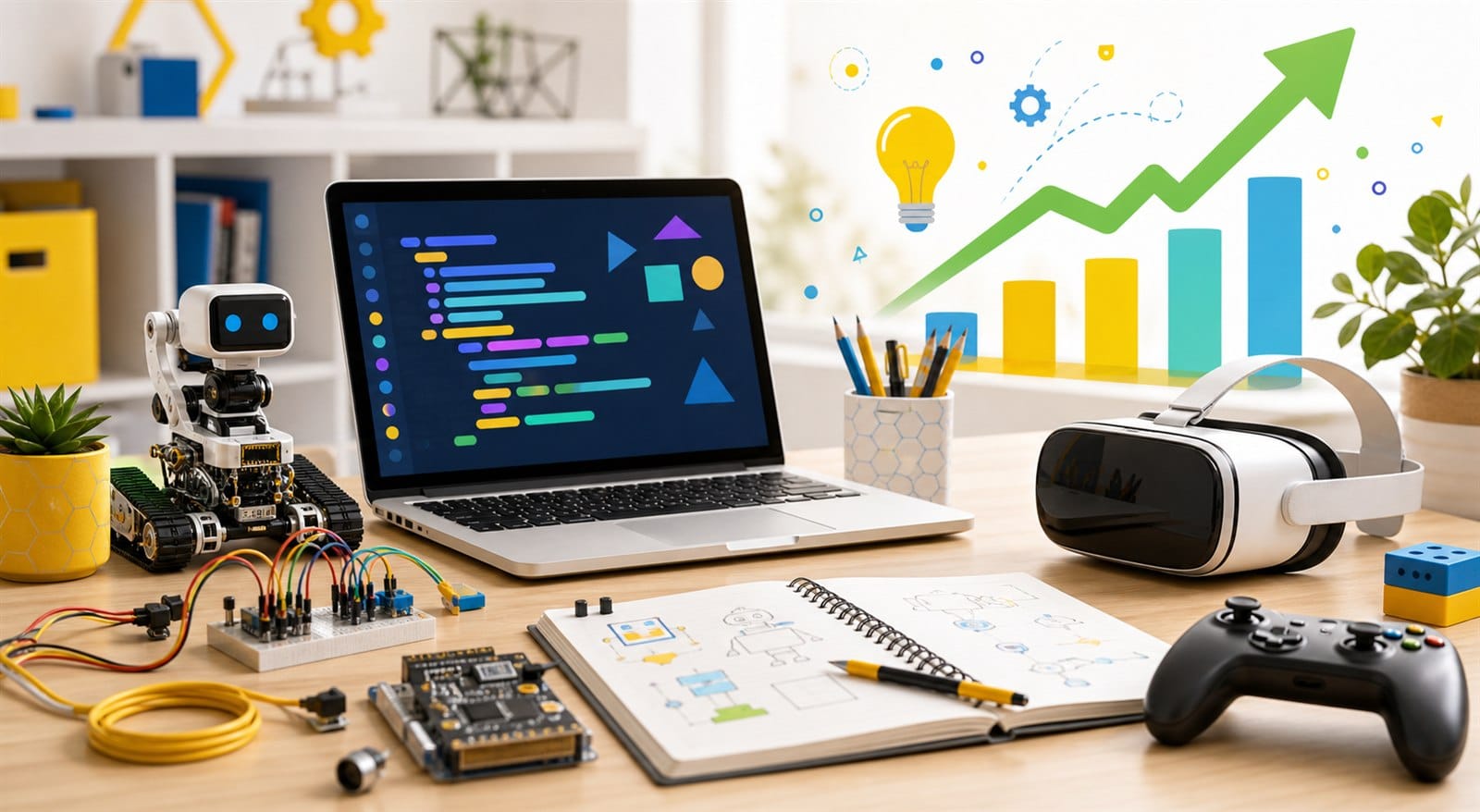
Game Development Skills
Students cover the core ideas behind interactive games: player controls, loops, conditions, variables, coordinates, collision, scoring, lives, levels, menus and feedback. They also explore how to make games feel fair, challenging and understandable for the player.
As projects become more complex, students learn why organisation matters. Clear naming, tidy logic, testing and step-by-step debugging all make the difference between a game that nearly works and a project that students can confidently explain.
Minecraft-Style Modding and Game Worlds
For many students, modding and game-world creation are a powerful way into coding. Students can explore how code changes rules, objects, environments and player experiences. This helps them see programming as a tool for building, not just answering questions.
These projects also support spatial reasoning and systems thinking. Students learn that a small change in code can affect a whole game world, so they need to test carefully and think through consequences.
Python, TypeScript and Text-Based Progression
Older Super Techs students may move from visual or guided environments into more text-based coding. This can include Python-style logic, TypeScript-style game scripting and the vocabulary of real programming: syntax, functions, parameters, loops, conditionals, variables, arrays and events.
The transition is handled carefully. Students still work through practical projects, but they begin to understand the discipline of writing accurate text-based code and reading error messages productively.
Debugging, Testing and Resilience
Debugging becomes more formal at this stage. Students learn to isolate a problem, test one part of the code, use evidence from the game, and explain what they changed. They also learn that mistakes are part of the development process.
This builds resilience. Students become more comfortable with trial, error, review and improvement, which are essential habits for computing, maths, science and independent study.
Game Jams, Badges and Project Confidence
Students benefit from short creative challenges, project milestones, badges and certificates because they make progress visible. Game-jam-style tasks can also help students work to a brief, make design choices quickly and present a finished idea.
By the end, students should have stronger coding vocabulary, better debugging habits, and more confidence explaining how a project works.
What Parents Can Expect
Parents should expect structured computing support that still feels creative. Students learn through projects, but the teaching is purposeful: each project is chosen to build logic, accuracy, independence and confidence.
Join the Waiting List
Families can register interest here: