
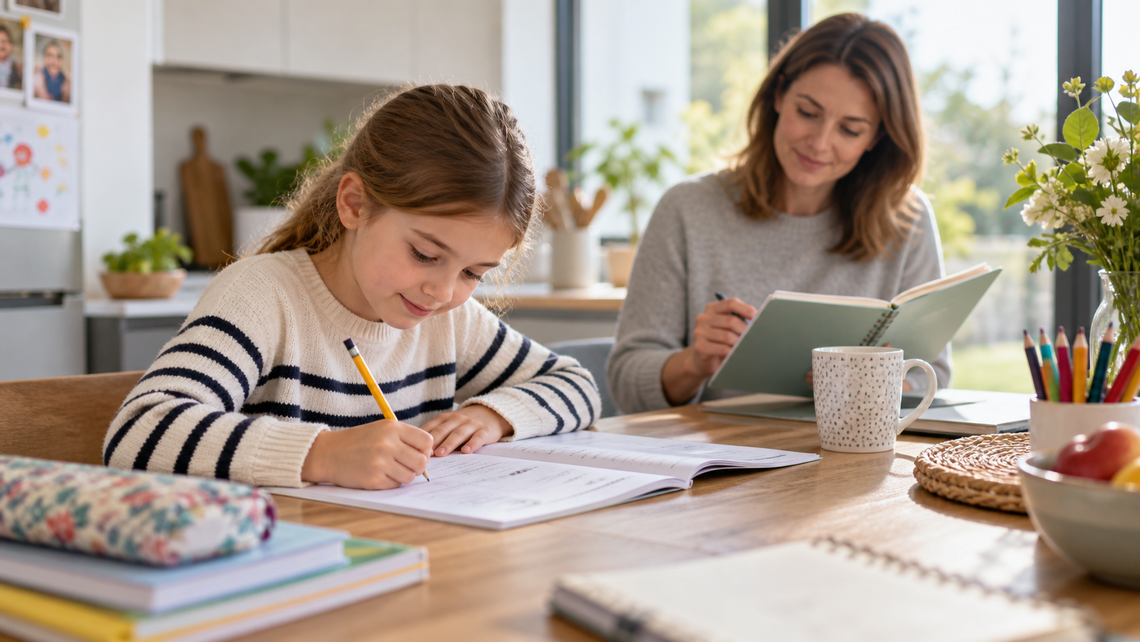
Homework should not take over the whole evening.
For many families, the problem is not that a child cannot do the work. The problem is that homework starts too late, happens in the wrong place, or turns into a negotiation before the first question has even been read.
A good homework routine does not need to be strict or complicated. It needs to be predictable, calm and short enough that children can repeat it without feeling defeated. The aim is to help pupils build independence, accuracy and confidence over time.
Start With the Right Time
The best homework time is the one your child can actually sustain.
Some pupils work well soon after school because the day is still fresh. Others need food, movement and quiet time before they can focus again. A tired child staring at a worksheet for an hour is not developing good study habits.
Try two or three possible homework slots across a week and watch carefully:
- When does your child settle fastest?
- When do they make the fewest careless mistakes?
- When do they need the least prompting?
- When does the routine cause the least stress for the family?
Once you find the best slot, keep it as consistent as possible. Children are more likely to start well when homework is part of the normal rhythm of the day.
Make the Workspace Simple
The workspace does not have to be a perfect study room. A clear corner of the dining table can work well if it is quiet enough and has the right equipment nearby.
Before homework starts, remove the obvious distractions: phones, television, background videos, toys and unnecessary tabs if the work is online. Then put the basics within reach: pencil, rubber, ruler, paper, reading book, planner and any school instructions.
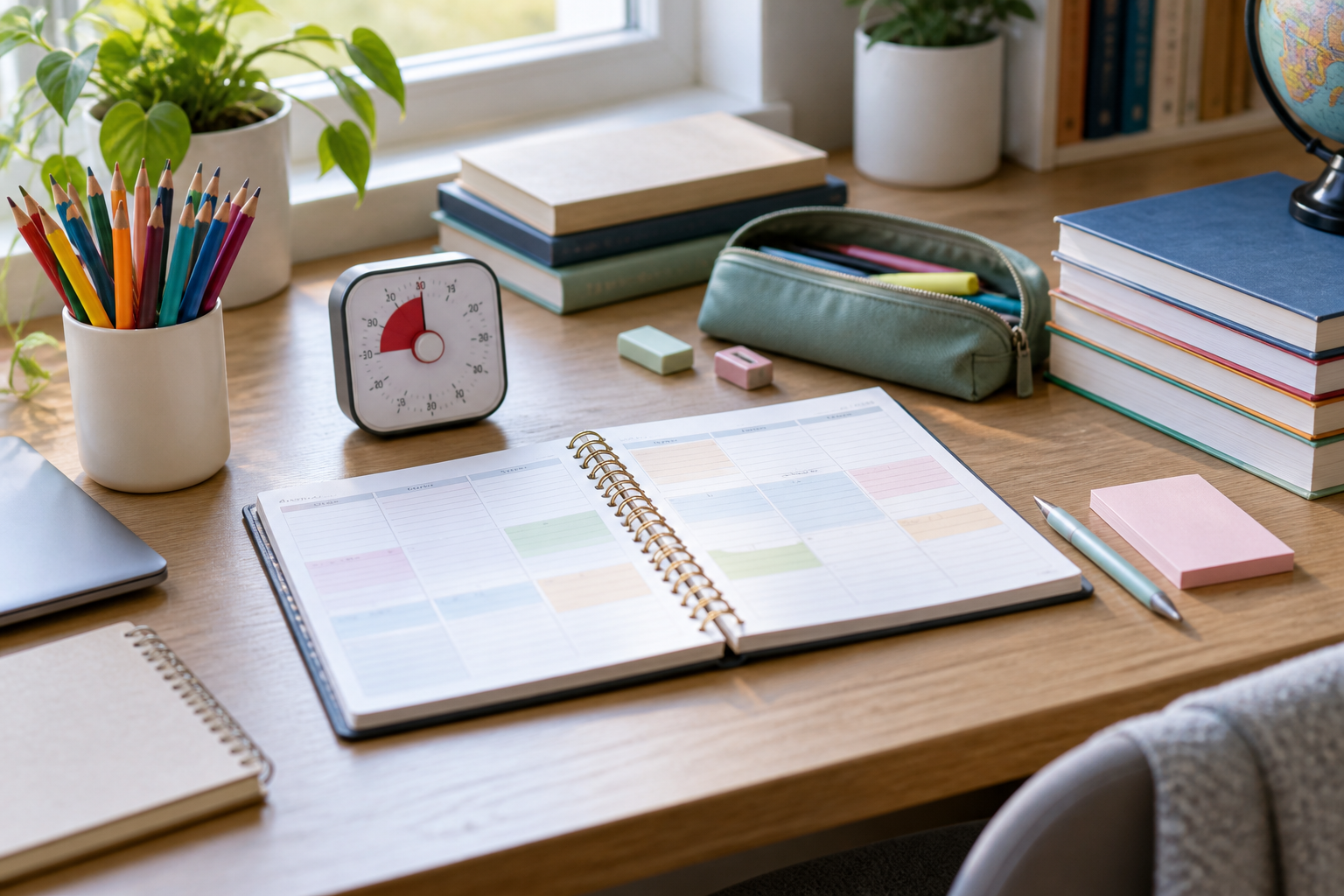
A tidy setup reduces delay. It also gives the child fewer reasons to stand up, drift away or restart the task repeatedly.
Break Homework Into Small Tasks
Many children resist homework because the task feels too large. “Do your homework” is vague. “Read the first five questions and answer the ones you know” is much easier to begin.
For younger pupils, use short blocks:
- 10 minutes reading
- 10 minutes written work
- 5 minutes checking
- a short break
For older pupils, the blocks can be longer, but the principle stays the same. Each block should have a clear finish line. That might be one page, one section, five questions or one paragraph.
When children can see progress, they are less likely to panic or rush.
Encourage Independence Without Disappearing
Parents often feel pulled between two extremes: sitting beside the child for every question or leaving them alone until frustration builds. Neither is ideal.
A stronger approach is to set the task clearly, let the child attempt it independently, then return for a short check-in.
Useful prompts include:
- “Read the instruction again. What is it asking you to do?”
- “Which part can you do first?”
- “Show me where you got stuck.”
- “What method did you try?”
- “Can you check that answer another way?”
These questions help children think. They also avoid turning the parent into the person who simply supplies the next answer.
Use Breaks Properly
Breaks work best when they are planned before the child becomes overwhelmed.
A five-minute reset can be enough: drink water, stretch, move around, sharpen pencils or breathe away from the page. Avoid breaks that become hard to end, such as starting a game, video or long phone scroll.
For pupils preparing for exams such as the 11+, GCSEs or SATs, planned breaks are also useful training. They teach children to manage energy and return to work calmly.
Keep a Weekly Homework Check
Once a week, look at the school planner, homework diary or online platform together. This should be a short planning conversation, not a lecture.
Ask:
- What is due first?
- Which task is likely to take longest?
- Is anything unclear?
- Do we need resources, books or login details?
- Which day is best for each task?
This prevents the common Sunday-night problem where families discover a large piece of homework too late.
What to Do When Homework Becomes a Battle
If every session ends in conflict, do not simply add more time. Look for the cause.
Common causes include:
- the work is too hard without teaching
- the child is exhausted
- instructions are unclear
- the routine starts too late
- the child is anxious about mistakes
- distractions are stronger than the task
In these cases, shorten the session and focus on one successful step. You can also write a note to the teacher explaining what your child managed independently and where they needed help.
A Simple Routine to Try This Week
Use this structure for five school days:
- Put the planner and equipment on the table.
- Choose one clear task.
- Set a realistic timer.
- Let the child attempt the work independently.
- Check effort, method and presentation.
- Correct one or two key mistakes.
- Pack the work away ready for school.
The routine matters more than perfection. A calm, repeatable 25 minutes usually teaches more than a tense hour.
When Tutoring Can Help
Sometimes homework is difficult because there is a gap underneath it. A child may be trying hard but missing a method, a reading skill, a times-table fact or the confidence to start.
At Super Thinkers, we help pupils build the academic habits behind successful homework: careful reading, clear working, stronger vocabulary, problem solving and calm review. The goal is not just to finish tonight’s task, but to make the next task easier to begin.
Parent Takeaway
A homework routine works when it is predictable, realistic and calm.
Choose the right time, keep the workspace simple, break tasks into manageable blocks and encourage independence with useful check-ins. Over time, homework becomes less of a daily argument and more of a steady habit your child can carry into tests, exams and independent study.